Car Seat Laws Australia
What are the car seat laws in Australia. Child car seats in Australia.

Custom Australia Aboriginal Car Seat Covers Torres Strait Islands In Wave Carseat Cover Seat Covers Car Seats
More on that later in the article.

. Must not travel in the front seat of a vehicle that has two or more rows of seats Children 6 months up to 4 years Must use either an approved rear facing infant restraint or a forward-facing child safety seat with an inbuilt harness. You will also need to check on the height markers for your seat. The back seat of the car is the safest place for all children to sit.
Everyone else in the world look at it as three steps backwards. Children under six months must use a rear-facing child car seat with an inbuilt harness. The seat must have an inbuilt harness ie.
Children between the ages of four and seven years must not sit in the front seat unless all the other seating positions in the car are taken by children under seven-years-old. Aged between 4 years and 7 years can travel in the front seat if all other rear seats are. They cannot travel in the front seat if the vehicle has two or more rows of seats.
Aged 7 years to 16 years are either in a suitable child seat or a seatbelt. The largest child should sit in the front in an approved restraint or booster. Either a forward-facing child restraint or a booster seat with seatbelt or safety harness is required.
Until a child turns four he must be restrained in the rear of the vehicle if your car has two or more rows of seats. Once a child is over seven years old a standard adult seatbelt can be used providing the child is large enough. By law all children must be securely fastened in an approved car seat or booster with the Australian Standards ASNZS 175 label on it.
Children up to the age of six months must be secured in an approved rearward facing restraint Children aged from six months old but under four years old must be secured in either a rear or forward facing approved child restraint with an inbuilt harness Children under four years old cannot travel in the front seat of a vehicle with two or more rows. Children aged between 7-16 years. Its quite a joke.
-Car seats are required in Ubers but most taxis in Australia dont require car seats though theyre strongly recommended and we wouldnt take our kids without them. The Australian law is brand new and the Aussies look at it as a great step forward. Aged under 7 years must not be in the front row of seats if the vehicle has two or more rows of seats.
Children up to the age of 6 months Must use an approved rear facing infant restraint. This means that the seat has met stringent standards and is approved for use on the road. Children between 4 and 7 can sit in approved forward facing child restraints or booster seats and may sit in the front seat provided all other seats are occupied by children also younger than 7 years old.
Children aged between 7 and 16 are required to use a booster seat or adult seat belt when travelling in a vehicle. Children with additional needs. Not your cars seatbelt.
Babies must be in a rearward-facing child car seat until they are 6 months old. There are often many questions from both drivers and passengers surrounding whether taking your children in an Uber is legal only slightly less confusion than with taxis. From the age of seven children who are too small to be restrained by an adult seatbelt are strongly recommended to use an approved booster seat.
In Australia recent changes to car seat laws mean children must be in a child restraint when traveling in a vehicle until they are seven years old. Even up to the age of 7 the child must be in the rear of the vehicle unless all other seats are taken by children under 7. Children aged six months up to four years must use a rear-facing or forward-facing child car seat with an inbuilt harness.
Whats people lookup in this blog. -Older kids must ride in a forward-facing car seat or booster seat in Australia until they are at least 7 years old but its recommended to use a booster seat until 49 tall. Car seats that do not comply with the Australian standard are illegal to use.
It is law in Australia than children under the age of 6 months must be rear facing - and in a child restraint which clearly shows the Australian Standard sticker on it. 4 years - 7 years. Child car seats children staying safe nsw centre for car seat laws in australia what you need to know pahub child car seats children staying safe nsw centre for my licence seatbelts and child restraints.
Car Seat Laws Australia 2018. The correct child restraint depends on the age and size of your child. All children under the age of seven must travel in a car in a correctly fitted properly fastened child restraint that meets Australian safety standards.
Car seat laws in australia what you need to know pahub what age is it safe for children to use a standard seatbelt you new child restraint laws for western australia pdf free washington booster seat law kids may have to be in them until. Weight is also a factor in determining what restraint is best for your child. The minimum legal requirements for using child car seats in Australia are based on age.
It is recommended that your child is at least 145cm tall to use an adult lap-sash seatbelt. Children aged between 4-7 years must travel in a forward facing child restraint or a booster seat. Western Australia Car Seat Laws 2018.
The rear facing car seats is designed for babies from birth and they can stay this way until they outgrow it which can be anywhere up to about the age of two. Child Restraint Car Seat Laws Australia In all Australian states it is illegal for any child aged 7 years old or under to travel in a vehicle without proper child restraints. All car seats must meet Australian Standard and be appropriate for your childs age and size.
From 6 months to 4 years you can use either a rearward-facing or a forward-facing child car seat. Maximum rear facing weight in Australia is 13 kg 28 lbs and Swedish or European rear facing seats are technically illegal. In Western Australia properly licenced Taxis Charter Vehicles and Busses are exempt from requiring child restraints under a police enforced regulation in the Road Traffic Act 2000.
Whats people lookup in this blog. Approved Child Car Seat Restraints.

The Uk Are Now Ahead Of Us In Australia With Extended Rear Facing Being Promoted And Extended Rear Facing Car Seats Rear Facing Car Seat Safety Baby Life Hacks

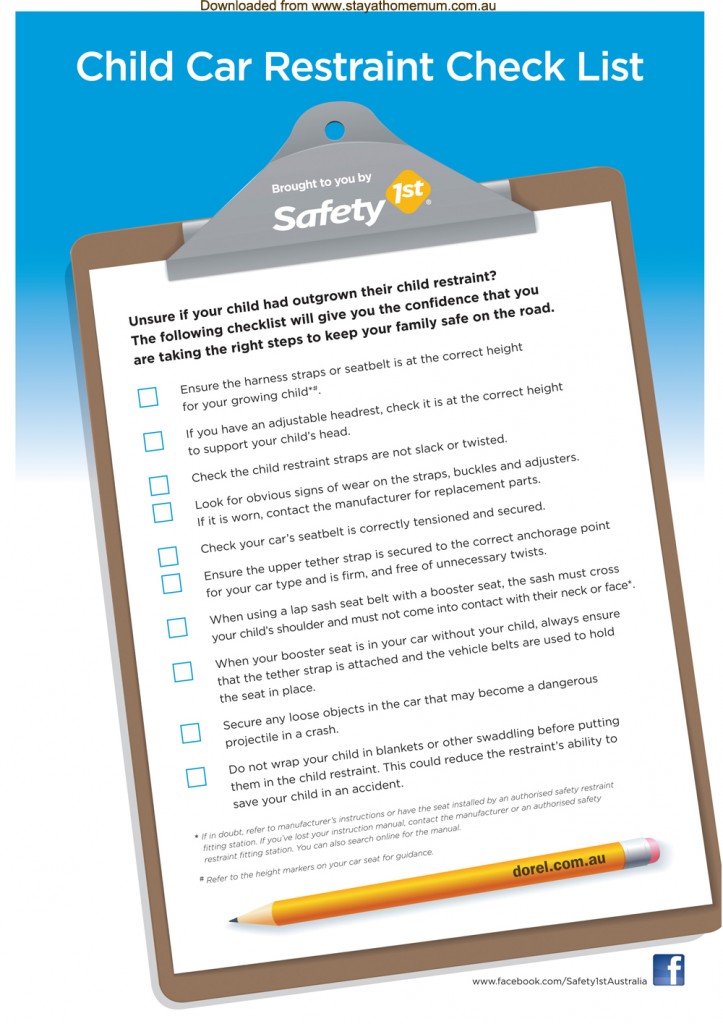
Car Seat Checklist For Parents Pdf Child Passenger Safety Car Seats Carseat Safety

Pin On Nutrition

Ultimate Guide To Child Safety In Motor Vehicles Act Child Car Seat Law In The Philippines Hello I M Frecelynne Child Car Seat Car Seats Child Safety

Best Rated Convertible Car Seats Best Convertible Car Seats Convertible Car Seats Baby Car Seats Convert Baby Car Seats Car Seats Best Convertible Car Seat

Pin On Car Seat Safety Australia

The Winners Of Australia S Biggest Consumer Opinion Awards Announced Car Seats Baby Car Seats Convertible Car Seat

Pin On Smiles From Around The World

Travelling Pooch Have Introduced A Unique Durable And Practical Booster Seat So Your Hound X2f S Can Safely Enjoy Car Trips Dog Ramp Car Safety Dog Car Seats

Summer Seatbelt Safety For Your Family S Sake Child Passenger Safety Child Safety Seat Parenting Advice Quotes

Chicco Fit4 4 In 1 Convertible Car Seat Onyx Convertible Car Seat Car Seats Chicco

Road Safety Watch On Twitter Drivers Education Educational Infographic Infographic
Pin On Smiles From Around The World
What You Need To Know About The New Car Seat Latch Laws Carseats Carseatsafety Car Seats New Cars Latches

Best Toddler Road Trip Activities And Gear Toddler Road Trip Toddler Road Trip Activities Road Trip Activities

Extended Rear Facing Carseat Safety Rear Facing Car Seat Car Seats

Rock A Bye Baby Hire S Guide To The National Child Restraint Laws Printable Rock A Bye Baby Children Restraint

5 Point Harness Not 6 Nascar Drivers Use Them Mother Knows Best Carseat Safety Harness

Best Baby Car Seat The Ultimate Buying Guide In 2021 Baby Car Seats Car Seats Best Baby Car Seats


Comments
Post a Comment